
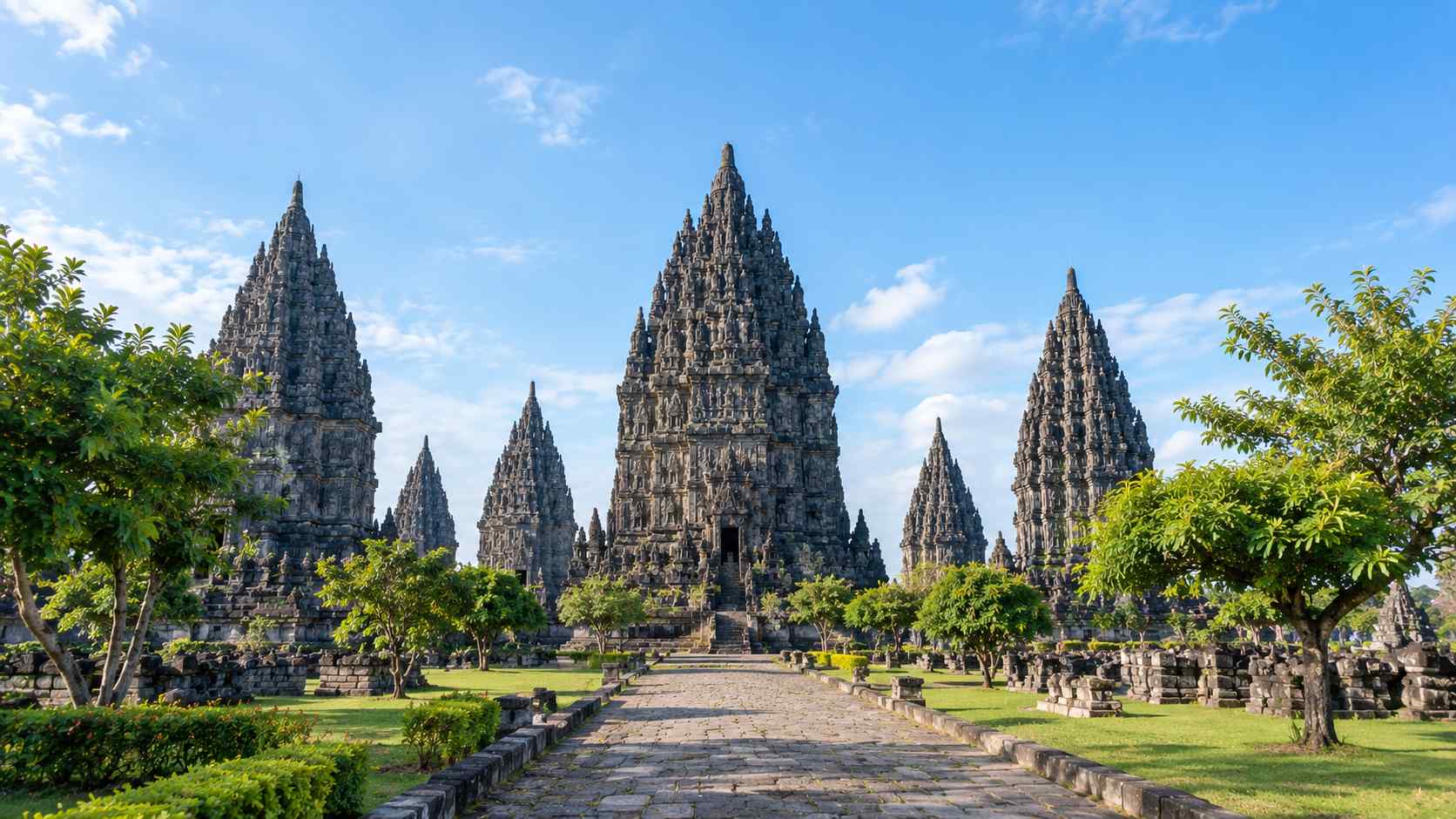
Prambanan temple construction remains an impressive achievement of ancient Java. Builders raised tall stone towers without modern machines. However, the process is easy to overlook when you stand before the finished monument. Therefore, this guide explains the planning, the materials, and the methods behind the temple. Moreover, it shares tips for noticing construction details during your visit.
Planning the Compound
Builders began with a sacred plan. The layout follows a mandala, and each temple has a fixed place. As a result, workers needed clear measurements and careful organization. In addition, the east facing direction guided the whole design. For wider background, read this guide on Prambanan temple architecture explained for curious travelers.
Choosing and Moving the Stone
Workers used volcanic andesite from the region. They cut blocks from quarries and then moved them to the site. Historians suggest that people used sledges, ropes, and rollers, along with the strength of many workers. Consequently, the project needed a large and well organized workforce.
Prambanan Temple Construction Methods
Builders stacked the blocks in layers and fitted them closely. Therefore, the walls stayed stable without heavy use of binding material. Furthermore, stones often interlock, which spreads weight evenly. Meanwhile, each level narrows toward the top, which lowers pressure on the base.
Corbelled Chambers
Inside, the rooms use corbelled arches. Stones project inward, layer by layer, until they meet at the top. As a result, the chambers feel narrow and tall. In addition, this method avoids the need for a true arch, which suited the tools of the time.
Carving in Place
After the blocks were stacked, craftsmen carved the surfaces. This approach let them adjust patterns across joints, so the images flow smoothly. Moreover, artists could plan scenes along the whole wall. Consequently, the reliefs feel connected rather than pieced together.
Handling Rain and Earthquakes
The steep roofs help rain run off quickly, which protects the stone. However, Central Java sits in an active seismic zone, and earthquakes damaged the temples many times. Fortunately, modern restorers studied the original methods and rebuilt the structures carefully, often adding hidden support inside.
Tips for Noticing the Details
Look closely at the joints between blocks and the way the walls step inward. Besides, notice how the carvings continue across stones. Visit early or late for soft light that highlights texture. Wear light, modest clothing and closed shoes with good grip, and bring water, a hat, and sunscreen. Because access rules can change, confirm current details before you go.
Plan Your Visit with Local Experts
A guide can explain the building process on site. That is why Borobudur Tours can help. Their team offers organized packages, experienced guides, and flexible options for couples, families, and groups. As a result, you can see the monument with new eyes.
Conclusion
Prambanan temple construction combined planning, strength, and skill. Consequently, understanding the process makes the towers even more impressive. In addition, a guide helps you spot clues in the stone.
Ready to explore? Visit Borobudur Tours today and reserve your trip for a day you will remember.
